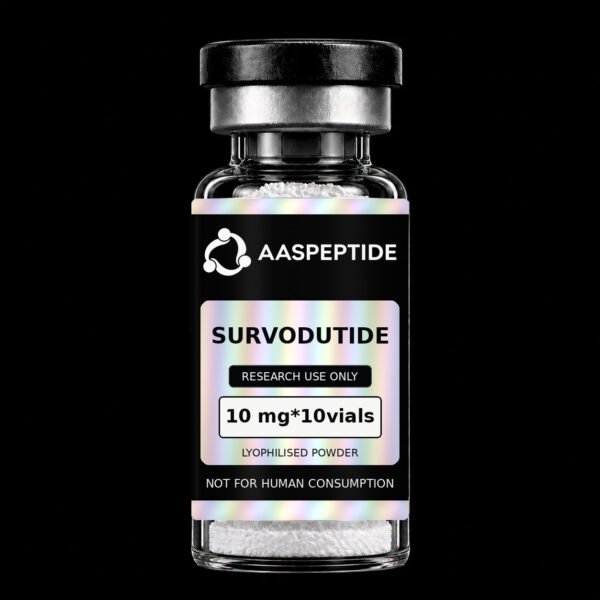
Drug Class: Glucagon/GLP-1 Receptor Dual Agonist Developer: Boehringer Ingelheim (in collaboration with Zealand Pharma) Molecular Targets: Glucagon Receptor (GCGR) and Glucagon-Like Peptide-1 Receptor (GLP-1R) Therapeutic Areas: Metabolic Dysfunction-Associated Steatohepatitis (MASH); Obesity Administration: Weekly subcutaneous injection (0.6-4.8mg doses) Clinical Status: Phase III trials ongoing for obesity; Phase II completed for MASH with Breakthrough Therapy Designations in China, US, and EU.
🔬 Mechanism of Action
Survodutide uniquely co-activates two key metabolic receptors to address both energy balance and hepatic pathology:
GLP-1R Agonism: Acts centrally to suppress appetite (via hypothalamic POMC neuron activation) and delay gastric emptying, reducing caloric intake by 30-40% in clinical models.
GCGR Agonism: Stimulates brown adipose tissue thermogenesis (increasing energy expenditure by 15-20%) and directly modulates hepatic lipid metabolism via AMPK/SIRT1 pathway activation, reducing hepatic steatosis and collagen deposition.
Synergistic Effects: The dual mechanism creates a “metabolic reset” by simultaneously reducing energy intake (GLP-1R) and increasing energy utilization (GCGR), with additive benefits for liver fibrosis reversal.
📊 Clinical Efficacy
🧠 MASH Treatment (Phase II Data)
In a 48-week randomized trial (N=195) of MASH patients with F1-F3 fibrosis:
Primary Endpoint: 83% achieved histological MASH resolution with no fibrosis worsening (vs. 18.2% placebo; p<0.0001).
Liver Fibrosis Improvement: 52.3% of patients showed ≥1 stage reduction in fibrosis (F1→F0, F2→F1, etc.), rising to 64.5% in F2/F3 subgroup (vs. 25.9% placebo; p=0.0005).
Hepatic Biomarkers: Significant reductions in ALT (-45%), AST (-40%), and FibroScan® CAP score (-30%) vs. baseline.
⚖️ Obesity Management (Phase II Data)
In a 46-week dose-ranging trial (N=387, BMI ≥27 kg/m²):
Dose
Weight Reduction (Intent-to-Treat)
Weight Reduction (As-Treated)
Responder Rate (≥15% Weight Loss)
4.8mg QW
14.9%
18.7% (19.5kg absolute loss)
67% (vs. 4.3% placebo)
3.6mg QW
13.2%
16.5%
55%
Placebo
2.8%
3.1%
4.3%
Secondary Benefits: Improvements in waist circumference (-14.2cm), HbA1c (-0.5%), and blood pressure (-8/-5 mmHg) at 4.8mg dose.
⚠️ Safety & Tolerability
Adverse Events: Mainly gastrointestinal (75% of treated patients): nausea (42%), diarrhea (31%), and vomiting (18%), typically mild-to-moderate and transient (peaking during dose escalation).
Discontinuation Rate: 24.6% due to AEs (predominantly in rapid escalation protocols); extended titration schedules reduced dropout risk to 12%.
Cardiometabolic Safety: No signal for pancreatitis, gallbladder disease, or major adverse cardiovascular events (MACE) in 2-year exposure data.
Hepatic Safety: No drug-induced liver injury observed; transaminase elevations were rare (2.3%) and reversible.
🔄 Regulatory & Development Milestones
Year
Regulatory Action
2021
FDA Fast Track Designation for MASH with fibrosis
2023
EMA PRIME Designation for MASH
2024
China NMPA Breakthrough Therapy Designation for MASH
2024
Initiation of Phase III program (SURMOUNT-Asia, SURMOUNT-Heart) for obesity
2025
Planned Phase III readout for MASH (primary endpoint: fibrosis improvement at 52 weeks)
🌍 Market Potential
MASH: Addresses a global patient population of 115 million, with no approved therapies. Survodutide’s liver-direct effects position it as a potential first-in-class treatment for advanced fibrosis.
Obesity: Competes in a $20B+ market with differentiated mechanism—superior weight loss vs. GLP-1 monotherapies (e.g., semaglutide 2.4mg: ~15% weight loss) and unique energy expenditure profile.
Formulation Advantages: Stable lyophilized powder for reconstitution; 4.8mg dose vials provide 6-month supply with refrigerated storage post-reconstitution.
Semaglutide is a GLP-1 receptor agonist originally developed for type 2 diabetes and now widely used in medically guided weight loss and metabolic optimization protocols. By mimicking the natural hormone GLP-1, it helps regulate blood sugar, reduce appetite, and delay gastric emptying — resulting in sustained fat loss, improved insulin sensitivity, and enhanced satiety.
This product contains Semaglutide in lyophilized (freeze-dried) powder form, requiring reconstitution before use.
Select options
This product has multiple variants. The options may be chosen on the product page
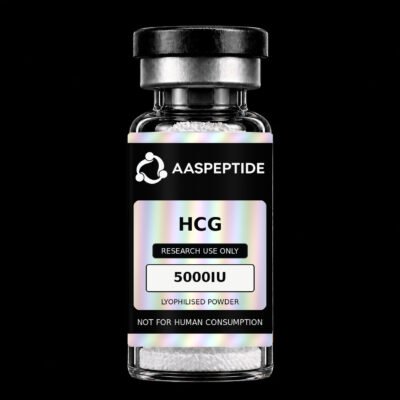
Human Chorionic Gonadotropin | Hormonal Support for Testosterone Optimization & Fertility
Overview:
HCG (Human Chorionic Gonadotropin) is a peptide hormone that mimics LH (luteinizing hormone), stimulating the testes to produce natural testosterone and support spermatogenesis. It’s widely used in TRT (Testosterone Replacement Therapy) to preserve fertility, maintain testicular volume, and prevent shutdown of endogenous testosterone production.
Each vial contains 5000 IU of lyophilized HCG powder, requiring reconstitution before use. 10 vials per kit.
Select options
This product has multiple variants. The options may be chosen on the product page